
Uncategorized
It’s Here!
░░░░░░░░░░░░░░░░░░░░░░░░██
░░░░░░░░░░░░░░░░░░░░░░███
░░░░░░░░░░░░░░░░░░░░███
░░░░░░░░░░░░░░░░░░░██
░░░░░░░░░░░░░░░░░░██
░░░░░░░░░░░░░░░░░███
░░░░░░░░█████████████████████
░░░░░███████████████████████████
░░░███████████████░█████████████
░██████████░██████░██████░██████
░█████████░░░█████░█████░░░█████
█████████░░░░░████░████░░░░░████
████████░░░░░░░███░███░░░░░░░███
██████████████████░████████████
█████████████████░░░███████████
████████░░░████████████████░░███
░███████░░░░░███░░██░░███░░░░░██
░░████████░░░░░░░░░░░░░░░░░█████
░░░█████████████████████████████
░░░░███████████████████████████
Halloween Reading: Halloween: Magic, Mystery and the Macabre
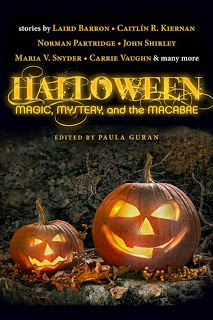 The Halloween anthology has become a large part of my yearly October traditions – whether decades old or hot off the press, I’m always eager to snap up a “new” one and give it a read. These days it’s easier than ever to slap together an anthology, upload it to CreateSpace or whatever self-publishing medium, and unleash it onto the world. Amazon is dripping with e-books available for free download offered by hopeful authors, and like anything else that becomes saturated to that extent, it becomes difficult to find the truly special collections.
And here we have Halloween: Magic, Mystery and the Macabre, edited by Paula Guran. The cover sports names that I certainly recognize, but most of them do not ring a bell. I did enjoy Guran’s previous collection, simply titled Halloween, for the most part, and she was kind enough to lend me a copy of her second anthology to read and present as part of my October celebration.
Eighteen stories make-up this collection, and as I’ve mentioned before, anthologies by nature are a Rorschach test. For those of a less critical mind, I suppose it’s easier to find an anthology in which every story enthralls and entertains, but frankly, it’s tough to put out such a collection with different authors taking different directions that still manages to please everyone. That’s the beauty of the individual.
Halloween: Magic, Mystery and the Macabre is no different. Here are my favorites:
“The Mummy’s Heart” by Norman Partridge
 Norman Partridge is an author with whom I am well familiar, as his novel, Dark Harvest, is frankly one of my favorites. (Read all about that one here.) His contribution here is hands-down one of – if not the – best in the collection. A story that begins with two brothers setting out for an innocent night of trick-or-treating and encountering a local kid named Charlie Steiner, who may very well have lost a little bit of his mind and perfected his mummy costume to the extent that he ordered water scum from the River Nile and cut off his own tongue. When the boys cross paths with this mummy, the story is legitimately eerie and upsetting—and it packs a rather hurtful revelation. Partridge is great with details, insofar as making each minor thing such as the moon or darkness seem alive and contain motive. He writes his story with such a realistic approach that it honest-to-gosh feels like it happened to him. At one point he even says something to the effect of, “Google it and see for yourself,” which I fully admit to doing.
The first part of “The Mummy’s Heart” seems like nothing more than haunted childhood recollection. You nearly expect it to end once the faux ending occurs, but there’s much more to this story – so much that it goes from a pulpy monster story to something much more haunting and heartbreaking. “The Mummy’s Heart” plays around with this idea of becoming someone else on Halloween night with the aid of a mask and costume, but what it really seems to be about is being driven to insanity by the idea that one is not happy with the person they are and wishes to become someone/thing else – and will do nearly anything to make that transition happen. And that’s just for the “villain.” It also plays around with refusal to recognize reality for what it is – to be haunted by dreams much more than nightmares. It’s the reason I continue to celebrate Partridge the author as years go by. He so easily writes about human emotion and longing that frankly it doesn’t matter what kind of ghastly device he’s using to frame his story – it’s always about much more.
“The Black Dog” by Laird Barron
 Laird Barron continues this theme of love lost and found with a tale in which a young(?) couple meet on a blind date in a restaurant. They embark on witty banter and attempt fact-finding missions about each other – the usual first-date kind of stuff. But here’s the thing: Is she, in actuality, dead? Is he? Both, or neither? Under the All Hallow’s sky, these two lost souls meet and remember what it is to yearn again. Though it’s told primarily from the man’s point of view, the woman provides us enough insight that it’s clear she’s just as troubled and lonely as he is.
There’s a beautiful ambiguity draped over every inch of “The Black Dog.” As the story progresses, you nearly want to race through every sentence to unearth the revelation that will hopefully explain the very odd circumstances in which these two people have found each other. A meal at a restaurant to a night walk across a bridge to sitting together in the woods – it’s a first date many would be consider to be ideal…except for that ominous idling van, of course. By my nature I’m attracted to things with a certain kind of sad beauty. It’s a reason why I love the works of Norman Partridge, and it’s also why I’ll certainly be checking out more work by Laird Barron, as well.
“For the Removal of Unwanted Guests” by A.C. Wise
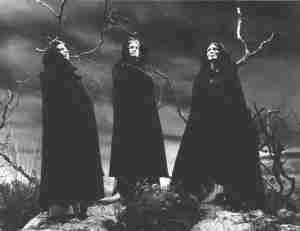 A story about a man named Michael moving into his new house who must contend with the random witch who shows up on his doorstep telling him she’ll be moving in. Just like that. The witch brings with her a black cat, as well as every manner of magical skill – she knows that one of the steps in the house is made of wood taken from a shipwrecked vessel, or the answer to one of the riddles in the old crossword puzzle Michael is holding. (She’s a witch, after all.) At first Michael wants nothing more than for her to leave – he even finds a spell in the witch’s book of magic strictly dedicated to (insert the story’s title here) – but after a while, what should be an easy decision to make becomes one with which he wrestles, to the point he might even MISS her once she’s gone…
“For the Removal of Unwanted Guests” is wonderfully and addictively absurd, yet charming. It’s a quirky story that seems to become more so as the pages turn. It’s nice counter-reading to the other darker and more haunting stories. There’s nothing especially horrific about the tale, except of course for something Michael’s unwanted guest states:
“Life isn’t fair. Nobody gets to choose whether they have a normal happy one or not. If they did, do you think anyone would get sick, or have their hearts broken? Would anyone die? It doesn’t work that way.”
Still, it might just be the most horrific statement in the entire book…because it’s absolutely true.
“We, the Fortunate Bereaved” by Brian Hodge
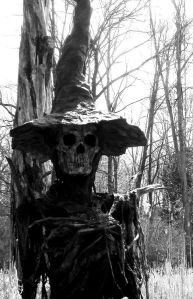 This tale breathes life into the scarecrow legend of Halloween, which may or may not be rooted in historical lore. The scarecrow has been associated with Halloween for a long time, and Hodge’s story concocts a perfectly appropriate scenario as to why. Every year on Halloween night, in the town of Dunhaven, townspeople gather objects that symbolize the dearly departed in hopes that, if left as an offering, the spirit of their deceased loved one will fill the scarecrow and share a message with the bereaved. Many townspeople vie yearly for this chance, and among them for the first time are Bailey and her young son, Cody, who wishes to see the resurrected spirit of his father, Drew. Also hoping to see the return of a loved one is a young woman named Melanie, whose sister, Angela, went missing several years before and was never found, so was presumed dead.
I rather liked this story, as it reinforces the idea of “maybe it’s better not to know.” Cody is eager to ask his father about the afterlife and what the “rules” are, while Melanie wants to ask Angela who was responsible for her disappearance and death. The story’s themes are open to multiple interpretations, but I prefer to think that existence, as we know it, is so terrible – lacking actual humanity amongst its humans – that the dead don’t so much as choose to come back as they’re forced to.
As you can imagine, I’m really fun at parties.
These aren’t the only stories in the collection worth a read, but they were my personal favorites. Halloween: Magic, Mystery and the Macabre, as they say, has something for everyone. I’m personally drawn toward the dark and bleak, and so stories of that nature were my own highlights. But the book celebrates every kind of genre and approach – real history is intertwined with lycanthropy; real international conflicts are explored through themes of cults, insanity, and vampirism; some stories are quirky, some are anything but. My one real complaint about the anthology (and it’s one I often have with Halloween anthologies) is that while many of the stories contain Halloween elements, they’re not actually about Halloween in any way. Werewolves and vampires are fun and all, but their only ties to Halloween are that they’re spooky and monstrous, and so is Halloween, and so therefore, a connection. However, I can’t in good conscience say any of these stories are poorly written because they’re not; they’re just not entirely what the title promises.
Still, I recommend Halloween: Magic, Mystery and the Macabre. The book itself is nice and weighty; its girth confirms you’ll be getting a lot of bang for your buck. It’s not quite as large as, say, October Dreams, but it’s certainly one of the larger anthologies out there that (mostly) celebrates this time of year.
Contents:
Introduction: New Boo – Paula Guran
“Thirteen” – Stephen Graham Jones
“The Mummy’s Heart” – Norman Partridge
“Unternehmen Werwolf” – Carrie Vaughn
“Lesser Fires” – Steve Rasnic Tem & Melanie Tem
“Long Way Home: A Pine Deep Story” – Jonathan Maberry –
“Black Dog” – Laird Barron
“The Halloween Men” – Maria V. Snyder
“Pumpkin Head Escapes” – Lawrence C. Connolly
“Whilst the Night Rejoices Profound and Still “– Caitlín R. Kiernan
“For the Removal of Unwanted Guests” – A. C. Wise
“Angelic” – Jay Caselberg
“Quadruple Whammy” – Chelsea Quinn Yarbro
“We, The Fortunate Bereaved” – Brian Hodge
“All Hallows in the High Hills” – Brenda Cooper
“Trick or Treat “– Nancy Kilpatrick
“From Dust” – Laura Bickle
“All Souls Day” – Barbara Roden
“And When You Called Us We Came To You” – John Shirley
Halloween Reading: Haunted Air
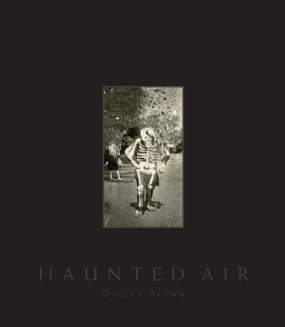 Anonymous Halloween photographs from c.1875-1955 — truly haunting Americana, with a foreword by David Lynch
Another one from the Halloween shelf, and it’s delightful: a collection of photographs from Halloweens past, showing people in their costumes in the midst of October pageantry. Some are eerie, some are cutesy, and some make me yearn for decades long gone where Halloween was celebrated in a purer way. I’d been doing this already for years: scavenging Internet for old photographs of people in their Halloween best. Turns out I could have just bought myself the danged book.
Synopsis:
The photographs in “Haunted Air” provide an extraordinary glimpse into the traditions of this macabre festival from ages past, and form an important document of photographic history. These are the pictures of the dead: family portraits, mementos of the treasured, now unrecognizable, and others. The roots of Halloween lie in the ancient pre–Christian Celtic festival of Samhain, a feast to mark the death of the old year and the birth of the new. It was believed that on this night the veil separating the worlds of the living and the dead grew thin and ruptured, allowing spirits to pass through and walk unseen but not unheard amongst men. The advent of Christianity saw the pagan festival subsumed in All Souls’ Day, when across Europe the dead were mourned and venerated. Children and the poor, often masked or in outlandish costume, wandered the night begging “soul cakes” in exchange for prayers, and fires burned to keep malevolent phantoms at bay. From Europe, the haunted tradition would quickly take root and flourish in the fertile soil of the New World. Feeding hungrily on fresh lore, consuming half–remembered tales of its own shadowy origins and rituals, Halloween was reborn in America. The pumpkin supplanted the carved turnip; costumes grew ever stranger, and celebrants both rural and urban seized gleefully on the festival’s intoxicating, lawless spirit. For one wild night, the dead stared into the faces of the living, and the living, ghoulishly masked and clad in tattered backwoods baroque, stared back.
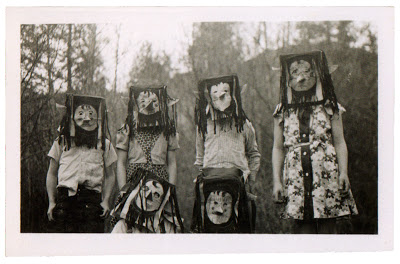 Haunted Air is a cool little book, and almost feels like it should be the official keepsake of Halloween, including its domesticated history. A large part of the appeal I hold toward Halloween is nostalgia-driven. I feel like I can remember every single year when I went out trick-or-treating, or the details of every party I attended, or what I spent every year doing with friends or girlfriends. It’s almost like an unending circle: Halloween is my favorite night of the year, and so I want to spend it doing the things I love. Those things live on in my memory and contribute to the fondness I have for Halloween in the first place.
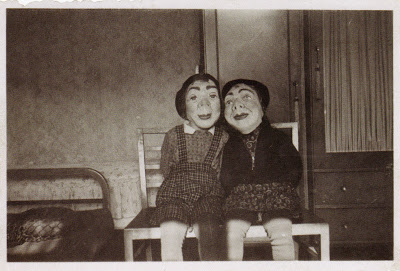 There’s not much else that I can say about Haunted Air other than it provides a time warp back through your entire life, not just the costumed caperers in the photos. Every significant era of Halloween’s American history is provided in the book, so no matter what your age, at least part if it will easily trigger something in you and make you recall that specific time in your life – whether good or bad. Keep it out on your coffee table so that during the month of October, as you’re passing by, take a minute to flip through a couple pages and enjoy the mini-trips to Halloweens past when life didn’t seem so complicated – and when all that mattered was on the page, forever preserved by a single snapshot.
Halloween Reading: Thirteen Horrors of Halloween
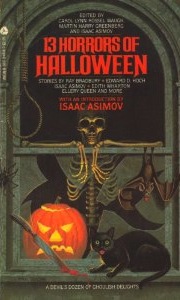 Isaac Asimov is a name that carries a lot of weight in the literary world, whether you’ve read his works or not. Personally, I never have, as his history of writing “hardcore sci-fi” just doesn’t appeal to me on a general level. But, when I randomly discovered a small book of Halloween short stories called Thirteen Horrors of Halloween compiled, edited by Asimov, who also contributes a story, naturally I gave it a shot. (That H words gets me every time.) What I found was a mixed bag; the stories that dipped their toes in the horror pool were fairly solid; those utilizing a safer genre (from mystery/noir to scientific espionage) were, sadly, less impressive. Though the day/night of Halloween was their constant, the stories’ tie to it were sometimes tenuous.
Anthologies by nature are usually a mixed bag. An anthology’s editor will attempt to compile great writers with different styles united in one common theme. Because of this, not every story will appeal to every reader. Kudos to any editor who ever broke that code, because I have yet to read an across-the-board anthological success. This collection is no different. Some of the stories are fantastic, some are average, and some, well…
Let’s get with the good.
“The Forces of Evil” by Isaac Asimov (Foreword)
This introduction is incredibly interesting as it delves into the history of Halloween. Most Halloween compilations feel the need to do this, so some of this information will be familiar, but some of it will sound quite new—like Halloween’s connection to 500 B.C. Persia…or even the bible. And did you know that in certain parts of the world there is a second Halloween—May 1?
Imagine the possibilities…
“Unholy Hybrid” by William Bankier
 A rather simple story about a farmer named Sutter Clay, renowned for his keen ability to effortlessly grow the most impressive and even visually interesting crops in his small town. His crops are proudly displayed each year at the town’s autumn celebration; his fellow townspeople have come to expect nothing less. He’s a man who prefers a life of solitude, but one rainy night, a drifter knocks at his door asking for temporary refuge from the nasty weather. Described as a “homely” woman, she proves herself immediately useful by cooking him meals and cleaning the house. Soon it’s several months later and she hasn’t gone anywhere—she’s used to having a place to stay, and he’s used to having her cook and clean. Things get complicated, however, when one night she confesses to him that she’s pregnant—with a direct and unavoidable implication that it’s his—and he’s none too happy about that. Without a clear reason why, Sutter solves the problem the only way he knows how. And that’s when that thing begins to slowly grow out of his grounds and haunt him.
“Unholy Hybrid” is great Halloween pulp. It’s rather dark and bleak, and its plot rather simplistic. It’s like a scenario any burgeoning writer concocts in their own mind as a possible story idea to pursue before waving it off and rightly assuming it’s already been done. Still, that doesn’t make it any less entertaining. And I like that, unlike most Halloween-set tales, this one actually begins months before the holiday. Entire seasons pass during Bankier’s careful yet momentary details, and it all leads up to Sutter Clay’s final terror—in the late hours of a new-born Halloween night.
“The October Game” by Ray Bradbury
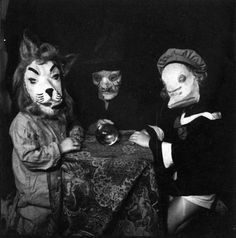 Honestly, if you’re even reading this and showing an interest in Halloween-based literature, it’s likely you have read perhaps the greatest Halloween short story of all time. I’m not even sure how you could have missed it, as it appears in nearly every Halloween anthology I own. It’s a story about a man who has grown completely unhappy with his life – caused by his loveless wife, Louise, and who gains no feelings of fulfillment by the love of his young daughter, Marion. Forced to host a Halloween party for friends and their children, the story opens with him staring hard at a gun in his bedroom drawer and pondering potential futures before he plasters a fake smile across his face and begins to host the night’s festivities – including a rendition of a familiar Halloween party game involving a nasty story and pieces of food you’ll never forget.
Apropos for Bradbury, “The October Game” is as nasty and mean as it is darkly humorous. Bradbury is an absolute master and easily envelops his readers with the emotions of his characters. Bradbury is a man who loved life and remained wholly optimistic about it for most of his career, but his ability to write about despair, isolation, and sadness would make you think otherwise. The antagonist of “The October Game” isn’t a monster or a sociopath; he is the embodiment of a very real fear to which most people can relate – his life is the end-result of choices he wish he hadn’t made, and which has come to feel more like a prison than anything else. And he sees only one way out. “The October Game” ends with a wicked last sentence, which by itself is innocuous and even amusing, but takes on a much different meaning after having read the events leading up to it.
“Halloween Girl” by Robert Grant
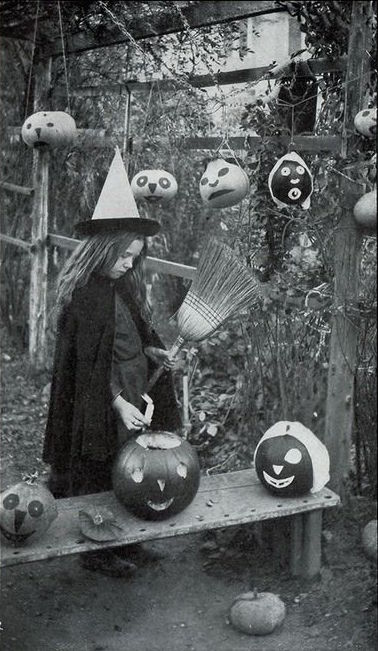 One of the several tales in the collection that sheds the horror in lieu of something different. Timmy and Marcie became fast friends not long after Marcie and her family moved into town. The two discovered they have a lot in common – especially when it comes to horror. They love everything about the genre and have spent countless hours in libraries and movie theaters soaking up every dread-filled second. Naturally their most anticipated day of the year is Halloween and the next one is looming, but it’s also one that will prove to be incredibly unforgettable.
Grant’s tale is extremely sweet and melancholy. It’s about young love, death, and growing up over the course of one Halloween night. It does a fine job of keenly making the reader recall the same types of friendships from his/her own childhood and it works well because its own simplistic yet effective iteration of a shared childhood works in tandem alongside your own. The ending will bring a sad smile to your face, for sure. My fondness for this particular story led me to naming one of my own short stories after it, “The Halloween Girl of Coldsprings,” though my own girl is a lot less sweet…
“Night of the Goblin” by Talmage Powell
 Told from the point-of-view of two fathers – one caring and thoughtful, the other anything but – two young children readying for a Halloween party will cross paths in a way where one of them is changed for good while the other will have no idea the part they played. And all it takes is one Karmel King.
“Night of the Goblin” is not horrific in an obvious way – there are no monsters or killers – but it does touch on themes of emotional and possibly physical abuse, and what a victim of said abuse is willing to do in order to save himself. And it uses an infamous Halloween urban legend to do it via a very clever re-imagining of “trick-or-treat.” There is a plot within the plot, masterminded by one individual. This is the trick. But this mastermind will be utilizing the most mundane thing in his candy bag to pull it off. This is where the treat comes into play. Though not a challenging read, Powell’s tale sets itself off from other Halloween tales in that focuses on something much more real and much closer to home. It’s likely the story you won’t think much about soon after finishing it, but will soon come back to fester somewhere in your mind.
“Pumpkin Head” by Al Sarrantonio
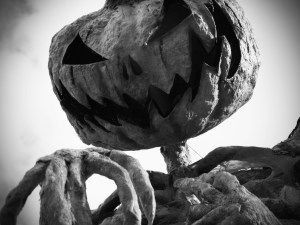 A little girl named Raylee, a shy introvert at a new school, is encouraged by her teacher to tell aloud a scary story during their class Halloween party. Raylee shares with her classmates the tale of Pumpkin Head, a sad and lonely boy born with a mutant head shaped like – you guessed it. It would seem Pumpkin Head could only take all the bullying of his students for so long before bringing something to the front of the classroom to show his teacher: a metal lunch box. And inside is a knife. “My lunch and dinner,” Pumpkin Head tells his teacher. “My dinner and breakfast.” Raylee’s teacher halts the story before its gruesome ending, but the kids seem to love it, anyway. One of the students smiles and invites Raylee to her Halloween party that night. It’s the last party many of them will ever attend.
“Pumpkin Head” has been printed in several different Halloween anthologies (just like Bradbury’s “October Game”) and there’s a good reason: it’s fantastic. It is a very clever and accomplished amalgam of Halloween traditions, present both in the upfront setting, but as well as on a thematic level. It’s about wearing costumes – obvious ones, not so obvious ones, and ones beyond our nightmares. It unfolds with suspenseful inevitability, but you’re not quite sure for whom you’re concerned. Is it Raylee, the introvert who just wants acceptance? Or is it her school mates, whose allegedly good intentions might actually instead be motive to make Halloween for little Raylee a lot more like hell?
“The Circle” by Lewis Shiner
 A group of thirty-somethings continue their tradition of gathering together every year in an isolated cabin on Halloween night to share the scariest stories they could find – whether of their own creation or by a celebrated author. Among them is Lesley, somewhat pensive about attending this year’s meet after having a tryst with Rob, a former lover she had brought with her the previous October. Their romantic whatever ended rather abruptly and she hadn’t heard from him since, but she attempts to forge ahead. Once the member stake their seats, one of them takes out a letter from Rob, explaining that he would not be attending that year’s get-together, but requests the enclosed short story be read aloud. After a bout of silence, Lesley agrees to read it. And things take a turn for the worse when she realizes that events in the story seem to be closely mirroring real life—VERY closely.
“The Circle” is a pretty great offering. It’s brief, but packs a mean punch. Lesley is surprisingly fleshed out, given the brevity of the events, and it even manages to add a satirical bent, eager to go after what seems to be the target of literary critics. I can certainly get behind that! (Read the whole thing on the author’s website.)
“Yesterday’s Witch” by Gahan Wilson
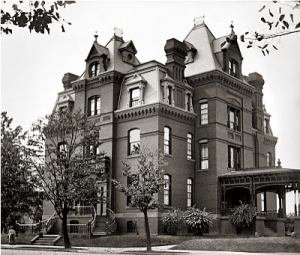 A group of kids who one Halloween night tempt fate and knock on the door of Miss Marble, whom the children believe to be a witch. The yearly visitation of her house by neighborhood kids has become a Halloween tradition, but the most any kid was willing to do was knock on her door before hightailing it out of there. But this year, one particular boy has decided he’s going to knock…and wait for her to answer. And who should answer the door? The elderly and harmless Miss Marble, who invites them in for treats? Or is it a bonafide witch, like so many of the kids believe?
Perhaps both…
Written less like a story and more like a childhood recollection, “Yesterday’s Witch” ably captures the spirit of Halloween in a rather innocent fashion. It’s certainly one of the more PG offerings in the book, but still manages to chill you, should you let it. Gahan’s choice to recollect the story using a child’s memory strengthens the details and even catches you off guard with its wicked ending.
The remainder of the collection offers stories either so-so or less so, and this even includes the contribution from the collection’s editor. “Halloween” by Asimov is a very brief mystery that takes place in a hotel on November 1. It would seem some plutonium has gone missing and the man who stole it is dead, his last words being – you guessed it – “Halloween.” There’s nothing horrific about this tale at all, and its ties to Halloween exist only to create a quick mystery before ably solving it. Even the most loyal fans of Asimov’s work regard this as a curious but forgettable piece from the author’s otherwise pretty expansive and impressive body of work.
Thirteen Horrors of Halloween hasn’t been in print for years, but used copies can be snagged at the usual haunts. It’s more than worth it, if only for a handful of great stories as opposed to an entire collection.
Reading: Craig & Joan: Two Lives for Peace
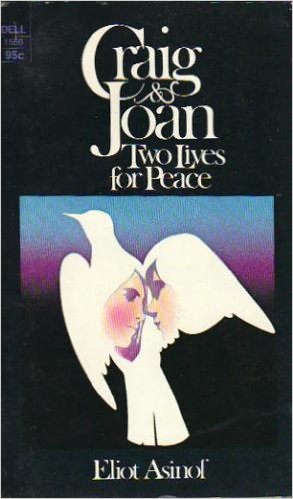 If we can take a break from typical October reading for a second…
Craig & Joan: Two Lives for Peace tells the story of two very real teenagers – Craig Badiali and Joan Fox – who killed themselves on October 16, 1969, in protest of the Vietnam War. Their hopes were that their deaths would make people see that life is cherished and shouldn’t be wasted. For such a drastic decision, their message was that simple. Love, and allow yourself to be loved.
While already pretty tragic, that this happened in my hometown of Blackwood, New Jersey, really knocked me back. Joan’s family lived two blocks down, on the same street, from where my parents would settle only ten years later and where I would spend the first quarter of my life. Caig’s family lived not too far from where I attended church and catechism in my youth. The place where Craig and Joan asphyxiated from car exhaust in Craig’s car, Bee’s Lane, was less than ten blocks from where I lived, and eerily close to where I attended elementary school.
The author, Eliot Asinof, had begun marking history of this event for what was meant to be a newspaper article – as Blackwood was besieged with reporters and journalists for weeks following the revelation of this event – but as real life tends to do, the story began to grow and expand; as he talked to Craig and Joan’s family members and friends, he began to get a sense of who these kids were. And not only are Craig and Joan explored and fleshed out into the real kids they were, but 1960s Blackwood culture is also put under the microscope. The various political movements going on at that time, in support and denouncement of the Vietnam War, are recollected. (Craig and Joan were participants in both.) History on the town of Blackwood is also provided, including a bit about George Washington donating to have the very first church of Blackwood built – and it still stands there today.
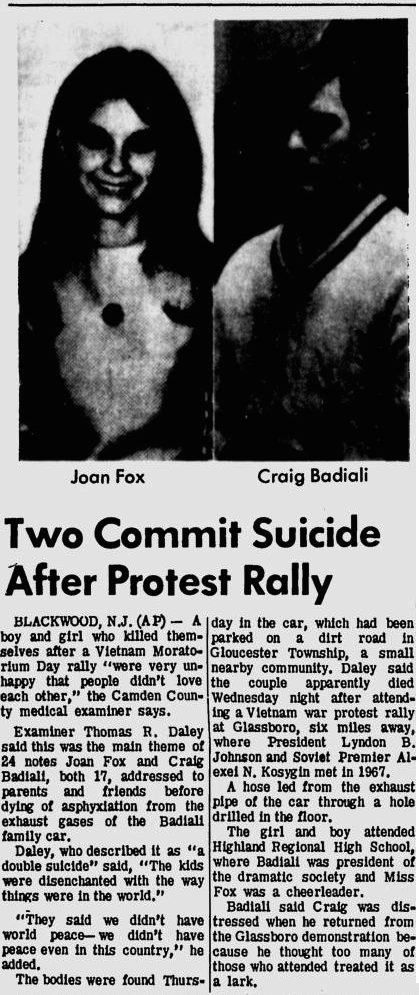
Probably the saddest thing about the book – on top of the already sad event of the kids’ suicides – is how utterly clueless and ignorant the many different facets of Blackwood culture acted in response. As could be expected, some institutions blamed Craig and Joan’s suicide on drugs; others claimed it was that hippie culture so much of the youth had been embracing. It was frustrating to read so many sources condemn this act but then dismiss it with a red-herring cause conjured strictly to lessen its importance or impact. And it’s especially frustrating when you read that the kids prepared specific suicide notes – a dozen each, if not more – and were intended for very specific people, and which very explicitly spelled out why they did what they did. Except for one or two, those notes have never been made public, nor even delivered to their intended recipients. That two non-hippie kids from normal, blue-collar households would willfully take their lives in an effort to achieve some kind of peace didn’t make any sense. The school system didn’t understand it, nor did their parents, nor did law enforcement. Disgustingly, the church didn’t even care, and one particular representative seemed intent on exploiting the family’s tragedy in an effort to get more people to attend his services – and to push the agenda of the church as much as possible
Craig and Joan: Two Lives for Peace is nearly thirty-five years old, and if there’s one thing to learn about our world after reading it, it’s that nothing changes. The obvious answers to so many of society’s problems are staring us all right in the face – folded cleanly and placed into envelopes with their recipients’ names clearly labeled. But because of one body’s decision to withhold the key to unlocking the whys of Craig and Joan’s fate, the world will always wonder. Their suicide notes are likely still sitting in an evidence room, perhaps in the Chews Landing Police Station.
Make no mistake that these kids were quite real. Their letters may have never been delivered, and their ultimate motivations behind their suicides may never be fully accepted, but they existed. They grew up together, loved together and each other, and are now interred next to each other in the Church Street cemetery in the same town where they grew up. Together, they shared their lives and their deaths – and their tombstones bare the same date on which they made the ultimate sacrifice for our benefit: October 16, which, in case you haven’t noticed, is today.
Craig and Joan: Two Lives for Peace is a sad and frustrating read, but also incredibly open and honest. And for a non-fiction book, it has the most gut-wrenching final line you’ll likely ever read – proof that history does, indeed, repeat itself.
Halloween Reading: Scary Stories to Tell in the Dark
I’m pretty sure, as a kid, you had these books:

I certainly did. They were as essential to my youth as the Goosebumps series and Wacky Wednesday.
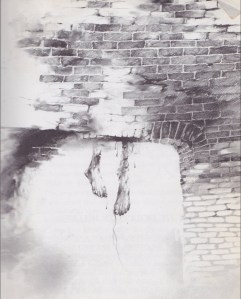 The stories themselves were pretty basic and well-known urban legends. They were vague, to the point, and sometimes even silly (though trying not to be). And you can only read so many stories that end with “now jump at a nearby friend and scream!!” before you roll your eyes. But these seeming shortcomings were an added strength for the book. In most cases, illustrations are in place to serve the story. In the case of Scary Stories to Tell in the Dark, it was definitely the other way around.
 But, at the same time – at a young age, and in the right frame of mind – the stories were chilling, and even sometimes disturbing, due in no small part to the incredibly strange and often surreal illustrations by Stephen Gammell. His approach to illustration was very nontraditional – especially for children’s literature. To sound like an elitist hipster douche bag for a second, his work in the Scary Stories to Tell in the Dark collection was very reminiscent of Dali, and Bosch before him. His interpretations of any particular story’s monsters were horrifying enough, but even human beings depicted normally within the confines of the tale suddenly became misshapen characters born from a nightmare. Occasionally there would be an illustration that had so little to do with the events of the story that it made the happenings that much more off-putting and unnerving.
For instance, in one of the most famous stories not just in the book, but in folklore itself, a girl named Susanna returns home to her college apartment to see that her roommate, Jane (in their shared bedroom), is sleeping. Susanna quietly undresses in the dark and slips into bed, only to be jarred awake several times during the night to someone singing “Oh, Susanna.” She repeatedly tells Jane to STFU. Yada yada yada, skip to the morning, and someone is still singing that song. Susanna flips out, jumps out of bed, and tears the covers off her roommate to see that she is dead.
End story.
And the illustration that accompanies this tale?
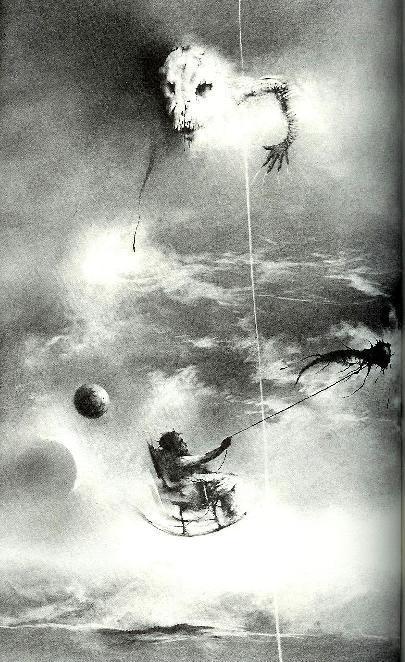
Yeah. What exactly is that? But…it somehow works. At the very end of this story, when the poor girl is assaulted with the sight of her mutilated friend on a bed only a few feet away, and the impossible sound of singing still fresh in her ears, perhaps Susanna has gone mad. And perhaps what you see is Gammell’s interpretation of madness. Or perhaps he is suggesting that we’re not in control of our own lives, and are helpless to defend ourselves against the dark forces that look down upon us from unseen places.
Perhaps he is telling us there is only fate – not free will – that will determine our paths…and that we are doomed.
Either/or – the friggin’ creeps.
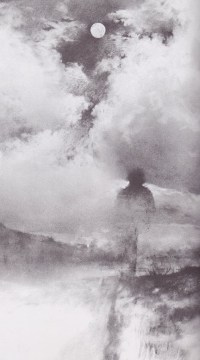 Flipping through the pages of Scary Stories to Tell in the Dark, the pictures you see before you could very well instead be hanging in a museum – and you would never think twice about their inclusion in artistic history, alongside other famous works by other famous artists. One of my personal favorite illustrations of Stephen Gammell is below – one which accompanies a story called “The Drum,” perhaps the eeriest story in any of the three books. Two young children – a brother and sister – become terrible nuisances to their mother, at the behest of a young gypsy girl who possesses a strange drum for which the siblings yearn. Their mother threatens to abandoned them – to leave them with a strange woman, who has glass eyes and a wooden tail. The siblings, though fearful of this threat, continue to misbehave in order to finally possess the strange drum. At story’s end, the gypsy girl explains that it was all just a game, and she never had any intention of giving up her drum. The siblings rush home…and see their new mother waiting for them in front of the roaring fireplace – their new mother with glass eyes and a wooden tail that thumps against the floor.
This illustration accompanies the story:
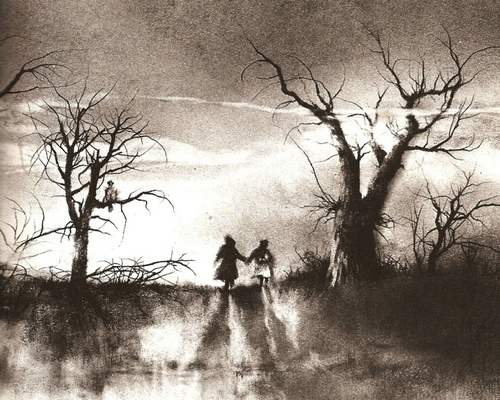
The painting below is entitled “Carnival Night” (1886) by Henri Rousseau.
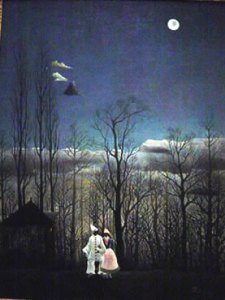
The similarities, whether intentional or not, show that Gammell has not just a modern illustrator’s mind, but that of a classic artist.
As of this writing, Gammell still provides illustrations for childrens’ books, and though Alvin Schwartz, who compiled the tales for the Scary Stories to Tell in the Dark books, has long since passed on, perhaps a fourth book will some day come down the pike under new guidance. And with it will come nightmares for a new generation of dark-seeking children.
“I was four at the time, thinking that I really didn’t want to go to school next year… I just want to do this — just scare other children so bad it gives them nightmares for the rest of their lives.”
– Stephen Gammell
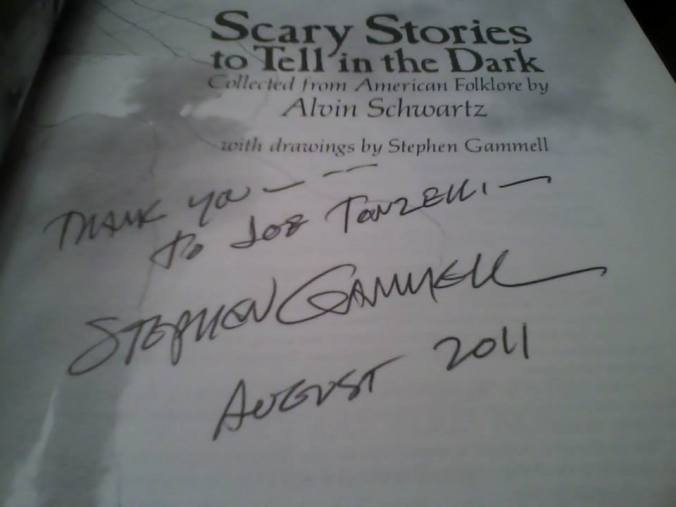
Bragging.
A Shadow of Autumn Interview
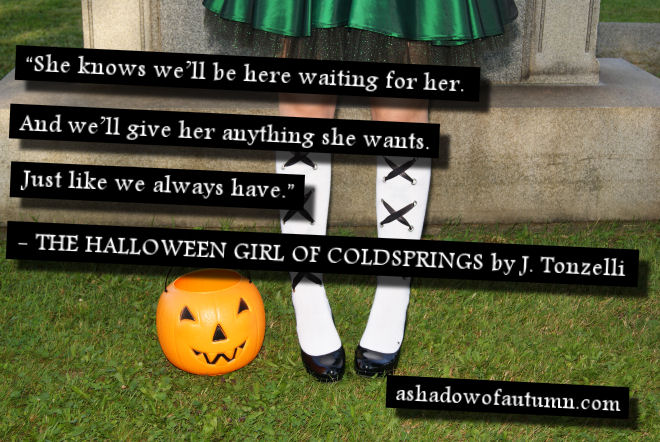 The masterminds behind the brand new Halloween and fall anthology, A Shadow of Autumn, have interviewed each of its authors…and it’s my turn on the firing line. Head on over to the book’s website and take a look, and check out the other author interviews while you’re there. Autumn’s team have assembled a great collection of folks to come together for a wicked Halloween party. I’m honored to be part of it.
Halloween Reading: The Demonologist
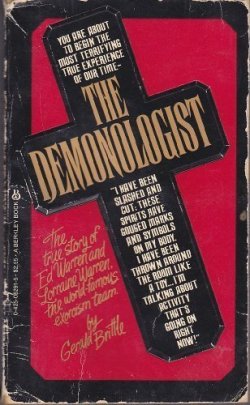 The Demonologist, an account of Ed and Lorraine Warren’s career in demonology, is one creepy-ass book. The Warrens’ names should sound familiar if you’re an “Amityville Horror” obsessive. (I am—with the original conspiracy, anyway, not the tepid film series.) To those who followed the saga of 112 Ocean Ave, either in its heyday, or in subsequent books, television specials, and/or truly abhorrent film adaptations, the Warrens should already feel like family. When the Lutz family fled their brief home after only 28 days and spouted off about the evil residing within, outsiders who eventually became involved in the controversy were actively split in regards to the legitimacy of the claims. In short, they either believed the Lutzes, or they didn’t. The Warrens and other occult specialists did, Law enforcement didn’t, and the media didn’t care—but they covered every inch of it like hungry canines.
While The Demonologist does mention Amityville from time to time, the Warrens don’t have much to say on the subject, other than they believed in the Lutzes and tried to help as best as they could. Instead, the book is actually a very detailed account of their careers and their life together—and of the evil that often followed them home from their “exorcisms.” The Warrens generally helped rid two kinds of infestation: oppression (ongoing harassment by a demon to break down a person’s will and make their body easier to inhabit) or possession (the invasion of a person’s body by a foreign entity). The book is largely comprised of direct quotes from Ed and Lorraine themselves, relating their own experience and encounters.
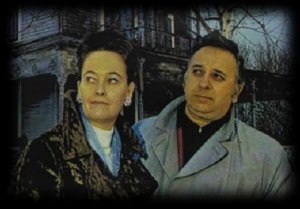 The book’s author, Gerald Daniel Brittle, does a commendable job taking this information and weaving in relevant information to fill in the gaps and create a coherent narrative. Chapters alternate between recollections of more memorable visits to homes where demon infestations once occurred, and the Warrens’ clear explanations of demonology in answers to questions author Brittle poses—and it’s especially helpful that Brittle asks the same questions that you or I would while reading the book.
What exactly is demonology? How does one become a demonologist? Because psychology is so often mentioned alongside cases where demonology (specifically exorcisms) is involved, does that mean there is a correlation between the two? Why don’t more people know about demonology?
Ed mainly handles these questions, answering each with a wealth of information based on his years of experience in the field. While Lorraine, too, is considered a demonologist, she instead refers to herself as a clairvoyant—one who is more sensitive to her surroundings and capable of seeing, hearing, and sensing things that most people do not. Houses infested with demons, she explains in the book, give off moods just like a human being does, and she is able to sense these moods during her preliminary walkthroughs of the houses in question. She also claims to see “auras,” which provide information – in the form of different colored halos – that surround every human being.

The Amityville House: 112 Ocean Ave
Even with Ed matter-of-factly reiterating information from past cases, the book is effortlessly creepy. A typical person who saw 1973’s The Exorcist and found it over-the-top would be shocked at how that film only managed to scratch the surface of what a true exorcism entails, and the traits those infested with a demon or demons may possess. The Exorcist featured unnatural vomit, physical manipulation of the unfortunate host, wildly fluctuating temperatures surrounding the possessed, and the knowledge of previously unknown languages. Ed Warren verifies all of this activity in the book. What The Exorcist didn’t portray was the materialization/dematerialization of objects, faces of the possessed briefly transforming into that of an animal’s, the smell or even physical appearance of excrement, or the presentation of foreign objects not previously located in the house. In one instance during an exorcism, Ed claimed a softball-sized rock appeared in midair and thudded on the floor, and upon having the rock tested by a specialist at a nearby university, confirmed that that specific rock was from a wooded area over 75 miles away. It’s this kind of information – unorthodox, unusual, and inherently unthreatening – that truly makes the claims that much more unnerving. Yes, if during The Exorcist Regan’s face had broken out into that of a cat or dog (or a gorilla, which Ed claims occurs the most frequently), the audience would have broken out into jeers. But with the mere explanation of that having happened in the past before you only in words, your imagination fills in the gaps, and it becomes a genuinely frightening thought—because that simply does not jibe with everything we like to think we know about the subject of exorcism. We think spinning heads and pea soup, not animal noises and mysterious stones falling from the sky and pelting the house of the afflicted.
While the book touches on some rather famous cases, such as West Germany’s Annaliese Michele (which inspired The Exorcism of Emily Rose), and the possession of Robbie Mannheim (alias), a boy from Maryland (which later inspired The Exorcist), a large portion is dedicated to the oppression/possession of the Donovan family. It is during these pages when the book is at its creepiest, and photographs of the damage done by the spirits are present.
Ed shares one particular encounter – not related to a case the Warrens were investigating – that I found especially unnerving, only because of how random the encounter was:
Only a few months ago, Lorraine and I had just been on a television show uptown in New York City. Afterwards, we took a taxi down to Chinatown for lunch. As we were walking along the street we saw there was some trouble at the corner, with police cars all around. So I suggested we cut through a walkway or alley on our left-hand size, which led to Mott Street.
Well, we took the alley, which was full of beat-up trashcans overflowing with garbage. Flies, maggots, and vermin were everywhere. The combination of the heat and the stink of decomposing garbage quickly began to sour our stomachs. Nevertheless, we kept going. Further back, the alley crooked slightly, so that beyond the middle you could no longer see the street.
We walked quickly, but as we got to the middle of the alleyway, at the end of this long row of trashcans, we saw two feet sticking out. I told Lorraine to stand still while I walked up ahead. When I got closer, I saw it was a man—a derelict. He was a Caucasian, between thirty-five and sixty-five—you couldn’t tell. The man was barely alive, sitting up against the wall with his legs stretched out into the path. He was filthier than anyone I have ever seen: covered with sores and scabs, and obviously riddled with disease.
But that just begins to tell the story. Because piled on top of him – as though he were sitting in bed with a quilt over him – were heaps of runny, putrefying garbage. This foul mess covered the man all the way up to his chest and down to his knees. His arms were plopped in the middle of this rotting slop, and flies were landing all over his face and body. Rats had apparently been gnawing on his feet and toes. It was evident the man hadn’t moved in days.
Ironically, his shoes were neatly placed beside him, shined up and ready to go. Now I have been in war and I have seen spiritual abominations in haunted houses but I doubt if I’ve ever seen anything so repulsive or disgusting in my life. How could this happen? How could a human being be reduced to such a stage?
I looked at this poor, wretched soul from the feet up, and was overtaken with compassion and grief. When I finally came to look upon his face, I was stunned and instinctively took a step back. His face was twisted into a perverse sneer—and there was that ugly, inhuman look of delirium in his eyes. Then I knew what had happened to him. And what was possessing that man, in turn, knew me, too.
‘You bastard!’ I said to it, so sickened was I by this scene. It laughed, mockingly. ‘I am killing him,’ it said to me. ‘In a few days, he will be dead. And do you know, there is nothing you can do about it. Because it is already done.’
Also in the book are several pages of transcribed audiotapes featuring Ed’s interrogations with the possessed. A piece of one of those interrogations is as follows:
Voice: I do not choose to be here!
Ed Warren (EW): Why did you come then?
Voice: I am under the Power!
EW: Whose power?
Voice: A white light!
EW: Describe yourself to me.
Voice: No. (A crucifix is then set in place, followed by agonized screaming by the possessing spirit.)
EW: Describe yourself to me!
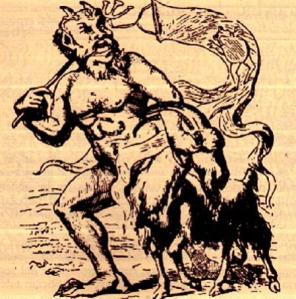
Voice: I must in truth tell you what I look like. I am wicked—and ugly looking. I am inhuman. I am vindictive. I have a horrible face. I have much gross hair on my body. My eyes are deepsunk. I am black all over. I am burnt. I grow hair. My nails are long, my toes are clawed. I have a tail. I use a spear. What else do you want to know?
EW: What do you call yourself?
Voice: (Proclaiming) I am Resisilobus! I am Resisilobus!
Resisilobus
And another, in which the possessing entity allegedly called himself Fred and spoke in a British cockney accent:
EW: Do you want me to bring a priest in here?
Voice: Yeah, all right. Bring ‘im in here. I’ll kick ‘im in the backside.
EW: What would you say if the Blessed Mother told you to leave, Fred?
Voice: Yeccch. Ugh.
EW: Do you know what this is, Fred? What do you see?
Voice: Uh…a cross.
EW: That’s right, a cross. That cross means your days are numbered here.
Voice: I’m gonna chop somebody’s head off.
EW: The next time I come back here, Fred, you’d better be gone. Because the next time I come I’m bringing a very powerful exorcist with me, someone you won’t want to mess with.
Voice: (There is a long lull.) Ed. Ed. Ed…Ed…Ed-ward.
EW: What is it, Fred?
Voice: Let’s play exorcist. Go get the holy water.
The Demonologist is infinitely fascinating to those with even a passing interest in the subject, regardless of where your belief system might lie. However, I must warn you that this book is definitely not for everyone. If you are a person who fervently believes that the world you see before you is all there is to see—that there’s nothing beyond—then you will probably receive no enjoyment from this book whatsoever. While the history and information would probably be interesting to all readers, its claims would be so easily dismissed from the first page that there would be no point for some people to continue reading. For all intents and purposes, the book is labeled and considered non-fiction—much to the chagrin of the more close-minded that question that label with a smirk.
I am a skeptic, by and large. I don’t necessarily believe in ghosts and demons and everything in between, but I also don’t believe things like that are impossible, either. Unlikely, perhaps—but not impossible. So when Ed recites, without a hint of irony, his experiences with haunted mirrors, or Ouija boards presenting very real dangers, your own personal prejudice is going to determine how you react. Because I am not 100% on board with the beliefs of the Warrens, I found some of the claims bordering on absurdity. However, the Warrens firmly believe in their careers as demonologists, and in the unseen entities they battle on almost a daily basis, and so because of that the book gets my respect. They were fully aware, even during the writing of this book, that they were opening themselves up to mockery by the more close-minded, but they were not deterred by that fact—instead, their aim of the book remains emphatically clear: demons are very real, and can very easily enter our world. The Warrens dictate what kind of people are more open to these invading entities (those who spend most of their days angry, or depressed; those considering suicide; alcoholics/drug addicts), and what things a person has to do to invite them in. (While the Warrens resist talking specifically about what a person has to do to entice these entities, they do confirm certain ceremonies performed by various people who later became victims of demons they foolishly invited into their life.)
Neurologist Steven Novella, president of the New England Skeptical Society (which is like being president of Sticks in the Mud, Inc.) has investigated the claims of the Warrens, and is pretty quick to dismiss their history as demonologists. “The Warrens are good at telling ghost stories. You could do a lot of movies based on the stories they have spun. But there’s absolutely no reason to believe there is any legitimacy to them.”
To lend a little credibility to the Warrens’ careers, it should be noted that they have never accepted payment from those claiming to suffer from demonic oppression or possession. If you called the Warrens, they came to you, and if they determined your claims were genuine, they stayed until the invading entities were gone—for free. Further, they even insisted on bringing home with them any particular items that may have been the catalyst for an invading demonic entity in the first place. They reason that to leave the objects with the family runs the risk of letting the same demon back into their lives, or to destroy the cursed item would unleash the demon into the world in general. And so, their “dark museum” grew considerably over the years:
There are about a hundred items in the collection so far, and almost every item has a story attached to it. There’s a string of pearls that when worn around the neck, strangles the wearer. There’s the long black spike a satanic witch used long ago to murder her newborn infant as a sacrifice to the devil. There is the sage plaster doll dressed in Victorian clothing that not only took on the features of the old lady who once owned it, but became animated and behaved like a human being for over 20 years. There are the crania of human skulls that have been used as “chalices of ecstasy” for drinking human blood during witchcraft rituals. There’s the coffin in which a possessed man slept each night for his whole adult life. There are stones – some quite sizeable – that fell out of the sky onto homes under diabolical siege. There are crucifixes that have actually been exploded by demonic spirits and excrement. There are written pacts with the devil, the black candles and conjuring book from the Hillman case, and by the door to Ed’s office is hung the conjuring mirror take from Oliver Bernbaum’s house in New Jersey. The planchette and burned picture frames from the Dononvan case are displayed on a table not far from a wooden cabinet in which Annabelle, the Raggedy Ann doll, now sits holding a plain wood crucifix in her little cloth hand.
The Demonologist was first published in 1980 and then for a long time afterwards was out of print, but a new edition is available, and time has been well to its contents. The information remains rich, intriguing, and scary. While Ed Warren is sadly no longer with us (he died in 2006), Lorraine has continued the battle against the darkness as a member of The New England Society for Psychic Research.
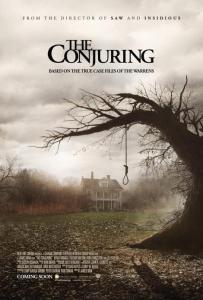 2013’s The Conjuring, directed by filmmaker James Wan, dove into the Warrens’ past to tell the story of the Perrons, a Rhode Island family who dealt with a demon infestation of their own during the 1970s. While the exploits of the family may have been discussed in the book, their name is never used, so it’s hard to say. The Perron family have maintained that, for the most part, the events of the film occurred as presented — including the possession of the mother. In a letter to Horror Movies.ca, Andrea Perron wrote: “The Conjuring is based on a ‘true story’…our story. However, the film is not based on my trilogy ‘House of Darkness, House of Light’. It is, instead, based upon the case files of Ed & Lorraine Warren. … There are liberties taken and a few discrepancies, but overall it is what it claims to be — based on a true story, believe it or not.” The stellar direction by Wan (also responsible for Insidious and Dead Silence, among others) takes an otherwise clunky script and churns out an excellent horror film – though it’s one that may or may not play fast and loose with the events as dictated by the family who claim to have lived them. [Norma Sutcliffe, the current owner of the Perrons’ former home, has gotten so sick of the tourists who have come to see the legendary house that she’s put together a comprehensive video dunking the claims found in Andrea Perron’s auto-biographical trilogy. Strangely enough, Andrea put together her own video with Norma, whom she refers to as “her friend,” so Norma could share the “spooky experiences” she’s had while living there.]
The Conjuring 2: The Enfield Poltergeist, another infamous Warren case, is currently in production with Wan back at the helm, and Patrick Wilson and Vera Farmiga returning as Ed and Lorraine Warren, respectively.
All of the Hollywood magic and she-said/she-said aside, The Demonologist remains a powerful, well-researched, and eerie piece of writing, and regardless on which side of the fence you stand – skeptic or believer – it covers interesting ground.
The Demonologist is available on Amazon, naturally, and several chunks can be sampled here.
For more information on the Warrens, be sure to check out their (woefully out-of-date) official website.
Halloween Reading: Halloween Horrors
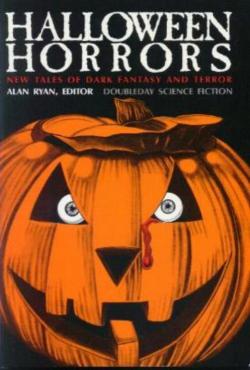 Alan Ryan’s 1986 anthology, Halloween Horrors, is probably the best short story collection out there concerning our favorite dark day of the year. An author of the macabre himself (some novels being Dead White and Cast a Cold Eye), Ryan knew just which authors to solicit for his celebration of All Hallow’s Eve. Luckily, the stories aren’t just creepy, but they re-imagine both the many myths of Halloween and the ambiance of autumn — which any proper Halloween story should do. My biggest annoyance with modern Halloween anthologies is the willingness for authors and editors to just write a horror story, set it on October 31st, and call it a day. Such a thing is entirely lazy — a killer or ghost on the loose on Halloween is no different from one loose on Christmas. The myths of Halloween are literally waiting to be plucked and re-imagined for proper literal celebrations. Ryan’s collection aptly does so, with tremendous results. These are my personal favorites:
“He’ll Come Knocking at Your Door” by Robert R. McCammon
This is an interesting choice to begin the collection, as it is the most fantastic and unusual. Alternating between creepy and morbidly funny, a man named Dan, who is a brand new citizen of a small town, is invited to a Halloween meeting at a neighbor’s house. At first expecting a brief Halloween get-together, he is shocked to hear an itinerary being read out loud – more specifically, a list of demands – that each person present at the party is responsible for placing outside their front door that same night…items to appease the dark, mysterious figure who awards the town with good luck and good harvest during the year. Most of the items appear to be innocuous – an old sweater, a model boat someone had assembled – but when Dan is told he must offer this figure the first joint of his young daughter’s finger, he leaves in a huff, thinking it was a joke gone too far. How very wrong he is. “He’ll Come Knocking at Your Door” is trick-or-treating at its most deviant and dangerous. And not only that, but it harkens back to the times in which food and animals were offered and effigies were burned in order to appease the Celts’ Pagan gods of harvest. In the story, you’ve got two choices: appease the figure, or don’t, but if you don’t…he’ll come knocking.
“Eyes” by Charles Grant
In the mini introduction to “Eyes,” editor Ryan explains that for this story, he wanted something “nasty.” Well, he asked for it, and he got it. Ron, the story’s pro(an?)tagonist, is an angry and haunted man, whose son is recently deceased. The accidental death of the son, who had suffered from mental deficiencies, is the catalyst for Ron’s horrifying Halloween night, as his son returns every October to punish his father. And all during this day, when Ron knows his son’s revisitation is inevitable, sets of eyes hover everywhere in the darkness and judge him with their orange orbs of light. Why eyes? You’ll have to read this haunting story for yourself. Grant uses short but very blunt sentences to tell his story, much to great effect. It just might be the darkest and perhaps angriest in the collection, but it’s also filled with immense regret, mourning, and sadness. The innocence of the son is enough to bring tears to your eyes—and that’s saying something for a story with an ending as “nasty” as this one. Of the entire book, this story always lingers in my mind long after I complete my yearly re-read.
“The Samhain Feis” by Peter Tremayne
The past is resurrected in a big way by setting the story where Halloween all began: Ireland. Katy has escaped her abusive and hurtful husband with her young son, Mike, and high-tails it for a week to a small, remote village in Ireland. It’s there she meets an older gentleman named Flaherty, who warns her of the time of year that is fast approaching: Samhain, aka Halloween—not one about trick-or-treaters and costumes, but pure, undeniable evil. Katy laughs off these stories, just happy to be away from her husband, but when Mike begins to spend all his time with an imaginary friend named Seán Rua – a name that sends Flaherty into a paranoid frenzy – and when Mike’s physical appearance seems to gradually change, Katy begins to believe that maybe the stories are real after all. Especially when the evil follows her home. “The Samhain Feis” successfully recalls the origins of Halloween, even setting the story right where it all began. The characters and descriptions of Ireland are very genuine and realistic (courtesy of its author, who spent time living there while working at a newspaper). And it certainly helps that it, too, ends with a creepy shock.
“Trickster” by Steve Rasnic Tem
Greg mourns his deceased brother, Alex, whose memory comes alive every Halloween. The story alternates between the present, in which Greg believes he is catching glimpses of Alex moving in between the rowdy crowds of San Francisco during a Halloween celebration, and the past, where random recollections of Alex’s pranks – becoming increasingly morbid – are remembered. Greg pursues his dead brother more and more persistently until…what? Is the Halloween festival bringing back memories of his dead brother, or has he really come back from the dead – complete with clown costume and mask – to say hello? While the whole story is intriguing and a quick read, the more interesting parts of it (for me, anyway) are when Alex’s pranks are broken down and explained in graphic detail. What Greg remembers as harmless and silly are actually quite graphic, and it becomes a game of “Can Alex top himself?” as each prank is recalled. If I had a brother whose “pranks” consisted of pretending to stab a baby to death – complete with bloody knife and decimated doll – I’d start to wonder if there were something seriously wrong with him.
“Miss Mack” by Michael McDowell
This story doesn’t really kick into horror gear until the last few pages. What starts off with the burgeoning of a rather unusual friendship between two schoolteachers, Miss Mack and Miss Faulk, soon becomes a tale of spite, revenge, and…well, it’s hard to say. Unrequited love is definitely at play here in the form of a love triangle (and to what extent the two school teachers love each other is left completely ambiguous), and it impacts the resolution to the story, which doesn’t end so well for one of our characters. “Miss Mack” is a different beast from the rest of the stories in that, for this one particular character, he/she has no idea what has happened to them. There are no inklings, no motives, and no clues as to if he/she has done something to deserve what’s taken place. The other characters in the other stories are flawed in some way, and through either their actions or inactions, have set things in motion, if not downright deserved the horrid thing that’s happened to them. But for the character in “Miss Mack,” you can’t help but sympathize with them, as they truly and utterly did not deserve the fate they received.
“Hollow Eyes” by Guy N. Smith
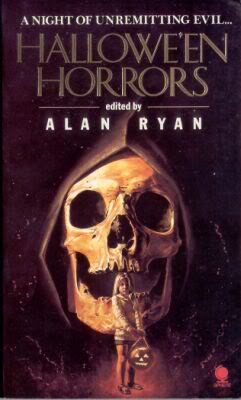 A father catches his daughter in a rather…er…uncompromising position with the boy she has been seeing—and the boy that he detests with nearly every of his fibers. A chase ensues, leading him (with a gun in his pocket) to a neighborhood bonfire. It is there that his momentary hatred of his daughter’s boyfriend is forgotten as he gasps at the horrid sight hanging just before him from a tree branch. And he soon realizes that he’s in a lot bigger trouble than he ever could have imagined. “Hollow Eyes” feels more like a nightmare than anything else—fragments of thoughts cobbled together from hazy memories and reiterated quickly almost as if the story’s teller were working against an imminent deadline. There are lapses in logic that feel nearly several pages long, as if you’d missed one piece of information that explained why the father is doing the things that he is doing, why he detests her daughter’s boyfriend so much, and why is it he’s gone so mad so quickly…but that works as a strength to the story. You’re barely just figuring out what the hell is up with Point A when Point B is already showing up to muddy the waters. It’s probably the most abstract story in Halloween Horrors and one that is not afraid to get its hands dirty—and bloody.
“The Halloween House” by Alan Ryan
If you can allow all the suspension of disbelief in the world, then “The Halloween House” is fun and rewarding. What starts off as a typical haunted house story ends as anything but, and four high school kids learn the hard way that Halloween isn’t just a holiday, but a living thing that literally surrounds them. “The Halloween House” has a charming beginning, in which Dale forgoes all common sense in order to try and impress Colleen, a girl with whom he is very much infatuated. The first few pages’ worth of descriptions can be tedious, but the story soon moves at a clip, ending in a twist that would normally be heavily forecasted midway through the story if the twist itself weren’t so completely absurd (in every way that’s good, that is).
“The Pumpkin” by Bill Pronzini
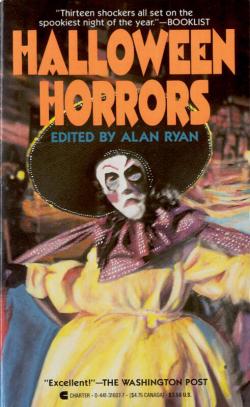 A nightmarish little story about an award-winning pumpkin farmer who yearns to take home the ribbon again in the coming year’s Pumpkin Festival. A ghastly discovery in the corner of his field, however, leaves the farmer’s wife shaken, and a farmhand repeatedly making signs of the cross. Together, they beg him to leave the pumpkin right where it is, for to unearth it would be to unleash an ancient evil the world has never known. The farmer laughs at their request, but agrees anyway, figuring why bother otherwise? That is until he fails to bring home that year’s prize at the Pumpkin Festival. His anger leads to boozing, which leads him to make some rather foolish decisions…and go back on his word. And carnage ensues. There’s not much to say about “The Pumpkin” other than it’s an effective and pulpy little yarn that manages not only to give you the creeps in that innocent and harmless sort of way, but also recall the feeling and mood of Halloween that I’m sure we all look back on and yearn for in some way every year. The descriptions of small-town festivities and the all-around blanket of autumn-tinged foliage is a nice pleasant interlude to the horror that ends the story…and perhaps even existence as we know it. Not bad for a pumpkin!
“Apples” by Ramsey Campbell
Harry and his friends, Colin and Andrew, think it’s fun and funny to sneak into Mr. Gray’s yard and steal apples off his tree—something he’s intent on guarding, as he’s gone as far as placing broken glass beneath the hedges that line his property. The kids won’t be deterred, however, and they hop the fence to help themselves to the old coot’s apple tree. In a surprise move, Mr. Gray bursts from his house with hedge trimmers and chases them, but soon suffers a mortal heart attack in the process. The kids flee and his body is soon removed…but if he’s dead, why does Harry see a face appear in the window of Mr. Gray’s house? Why does the rotten stench of apples seem to follow him everywhere he goes? “Apples” ends in a very creepy, if not too-cleanly-concluded fashion, and the moral of the story remains dangerously clear: don’t steal apples from crazy old men.
“Pranks” by Robert Bloch
 And the book, as they say, ends with a bang. The name “Robert Bloch” should be ingrained in your memory, even if you’ve never actually read his works – namely Psycho, which would go on to inspire perhaps the greatest horror film of all time (and kick-start the slasher movement). Made up of little vignettes featuring neighborhood parents, the story’s concept is difficult to grasp at first until you realize the purpose behind constantly jumping from household to household – each of them with a child late coming home from trick-or-treating. Very late. And within one of these households, something very sinister and unnatural is unfolding under the dark Halloween sky. “Pranks” is the eeriest story in the collection, and boasts the best ending. It’s one that doesn’t even become inherently creepy until the rapid final pages, in which you begin to play catch up and realize just what’s going on. And it’s an ending you will reread over and over, finding it so completely unbelievable that you’ll feel the need to make sure what you’ve read isn’t just your mind playing tricks on you. Or pranks.
Halloween Horrors, sadly, has been out of print for the last several years, but keeping an eye on Amazon or eBay from time to time might reward your diligence. Here’s hoping the genre- and Halloween-loving Cemetery Dance will resurrect this tome for another generation to pour over every October. The stories, though going on thirty years old, still pack a mean punch, and many of them – especially “Eyes” – will leave you feeling haunted long after you finish the collection’s last page and set it down until Halloween returns the following year.
 J. Tonzelli
You must be logged in to post a comment.